Bâmiyân
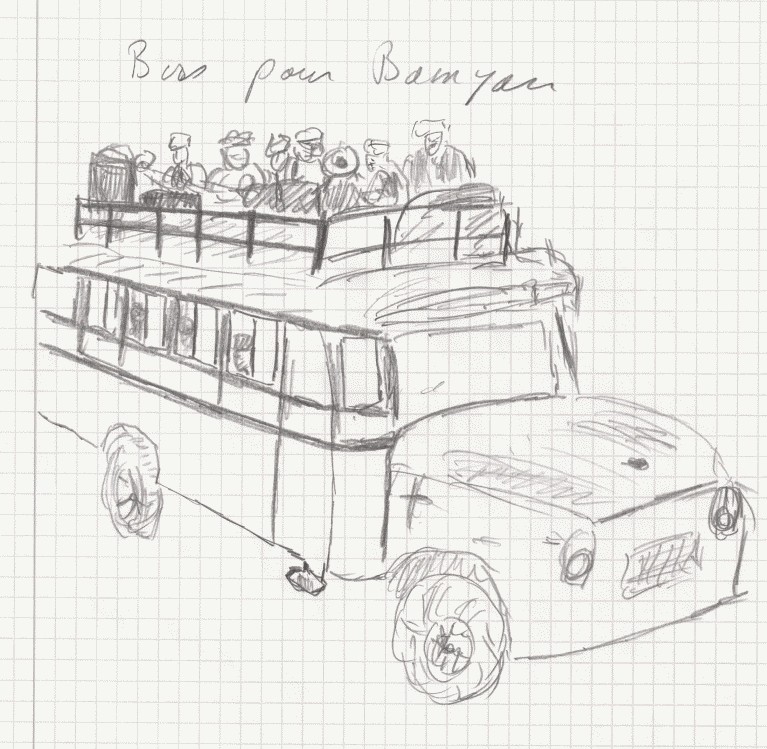
A spiritual and wild oasis, in stark contrast to the chaos of Kabul. The journey to get there, through the Hindu Kush mountains, is an ordeal in itself: roads destroyed by storms, overloaded buses, perilous crossings of torrents, and dizzying landscapes where human life seems precarious.
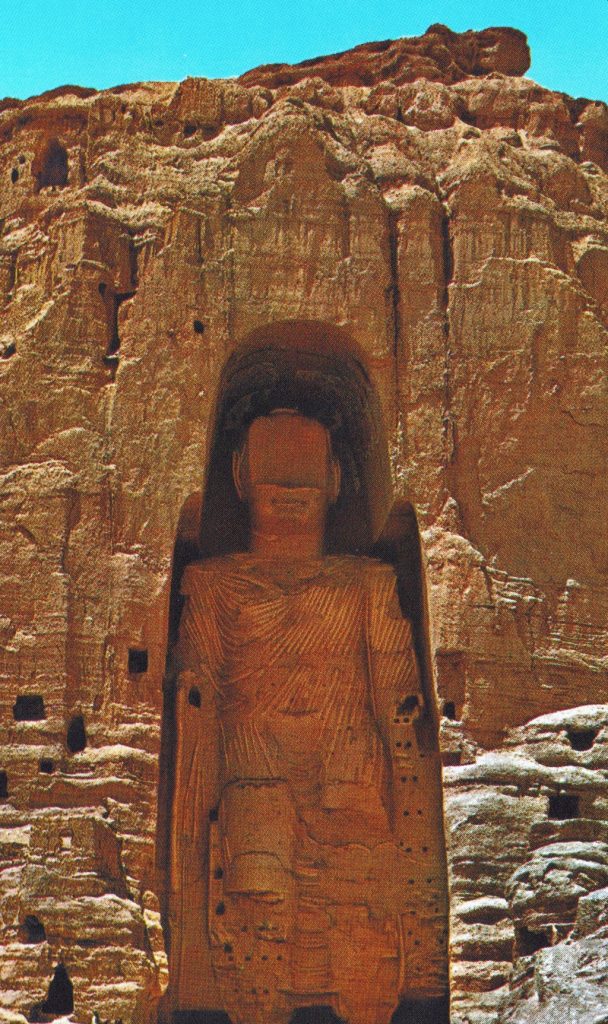
Upon arrival, the valley reveals its treasures: the two giant Buddhas, carved into the cliff over a thousand years ago, although mutilated (their faces and hands destroyed by Muslim invaders), exude a mystical and soothing presence.
The surrounding caves, decorated with Buddhist frescoes and once inhabited by monks, become a place of meditation and wonder, where the narrator feels at one with nature and history.

The days are punctuated by walks through the fields, encounters with farmers, and exploration of caves, culminating in the ascent to the Head of Buddha, a moment of absolute ecstasy (“the Great Flash”) where the landscape, the music of clay flutes, and a chilum smoked at the top of the cliff merge into an almost mystical experience.
Bamiyan embodies a timeless interlude, where the simplicity of peasant life, the beauty of the landscapes, and Buddhist spirituality offer regeneration after the excesses of Kabul. A place of rebirth, where we “forget who we were” to embrace a more elemental existence, between sky, stone, and water.
Evenings in the local chaikana, spent drinking tea, listening to music, and chatting with other travelers, reinforce this feeling of unity and fulfillment.
The departure for the Band-e Amir lakes marks the continuation of the adventure, while a companion, exhausted by dysentery, must turn back.